Elements of a Harvest Bowl: The Importance of Seasonal, Local Produce
Updated: Mar 12
The Power of Seasonal Produce for Your Health
Eating with the seasons is one of the simplest ways to support your health without overcomplicating things. Fruits and vegetables harvested at their natural peak tend to be more flavorful and more nutrient-dense, offering higher levels of vitamins, minerals, and antioxidants. The delicata and butternut squash in this bowl, for example, were harvested recently, which means they retain their natural sweetness, vibrant color, and nourishing qualities.
Seasonal eating also invites variety. As the seasons shift, so do the foods available to us, gently encouraging a more diverse diet over time. This natural rotation supports a broader intake of nutrients and keeps meals feeling fresh, inspired, and connected to the rhythms of the year.
Why Local Produce Matters
Sourcing food locally shortens the distance between harvest and plate - and that matters. Produce from farmers markets is often picked days, not weeks, before you eat it, preserving both flavor and nutritional integrity. The purple Brussels sprouts and avocado in this bowl were harvested locally, making them noticeably fresher than many supermarket options.
Local produce is also typically grown with fewer preservatives and less packaging, reducing chemical exposure and environmental waste. It’s a quieter, more thoughtful way to nourish yourself and the planet at the same time.
Supporting Community Through Food
Choosing local food is about more than ingredients - it’s about relationships. Supporting small farmers and producers keeps money circulating within the community and helps sustain livelihoods rooted in care and craftsmanship. Grass Valley’s Local Culture Ferments, for example, makes some of the most flavorful sauerkraut I’ve tasted. Their beet and fennel sauerkraut adds brightness and depth to this bowl while supporting a local artisan doing beautiful work.
Farmers markets also create opportunities for connection. You can ask questions, learn how your food is grown, and better understand what’s in season, knowledge that empowers more intentional choices in the kitchen.
Build Your Own Seasonal Harvest Bowl

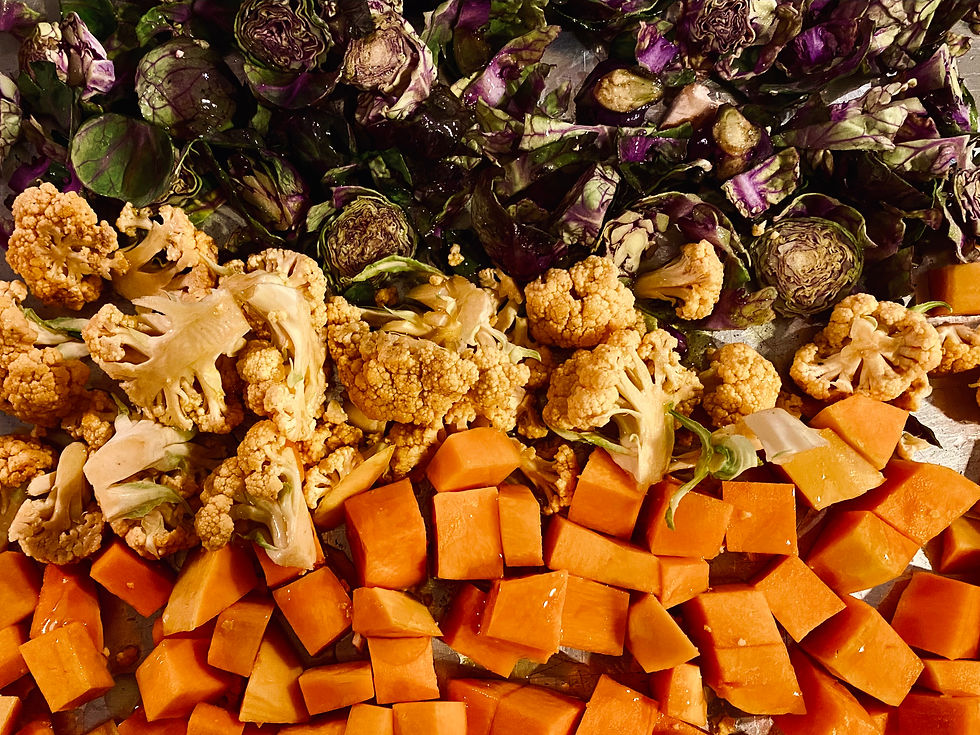
I made this harvest bowl the other night and couldn’t decide whether I was more excited to eat it or photograph it. The vegetables were simply chopped and roasted at 425°F for 25–30 minutes, but what truly made the dish special was that every ingredient came from the local farmers market. When you cook this way, the food speaks for itself.
Here’s an easy framework you can use at home, adapting it to what’s available near you:
Base: Soaked quinoa for plant-based protein and texture
Roasted vegetables: Purple Brussels sprouts, delicata squash, and butternut squash, tossed with ghee or olive oil, salt, and pepper
Fresh topping: Sliced avocado and a sprinkle of furikake for umami
Fermented element: Sauerkraut, kimchi
This bowl is naturally vegetarian, gluten-free, and deeply nourishing - proof that simple food can still feel abundant.
Tips for Cooking With the Seasons
Visit your farmers market regularly to notice what’s fresh and abundant
Ask vendors about harvest timing and growing practices
Plan meals around what’s available rather than a rigid grocery list
Experiment with produce you haven’t cooked with before
Add fermented foods to support digestion and add complexity
The Bigger Picture
Choosing seasonal, local food supports more than just personal health. It reduces the environmental impact of long-distance transportation and storage, encourages sustainable farming practices, and helps protect soil health and biodiversity. Eating this way is a quiet act of care - for your body, your community, and the world you live in.


Comments